Early Life and Formative Grounding
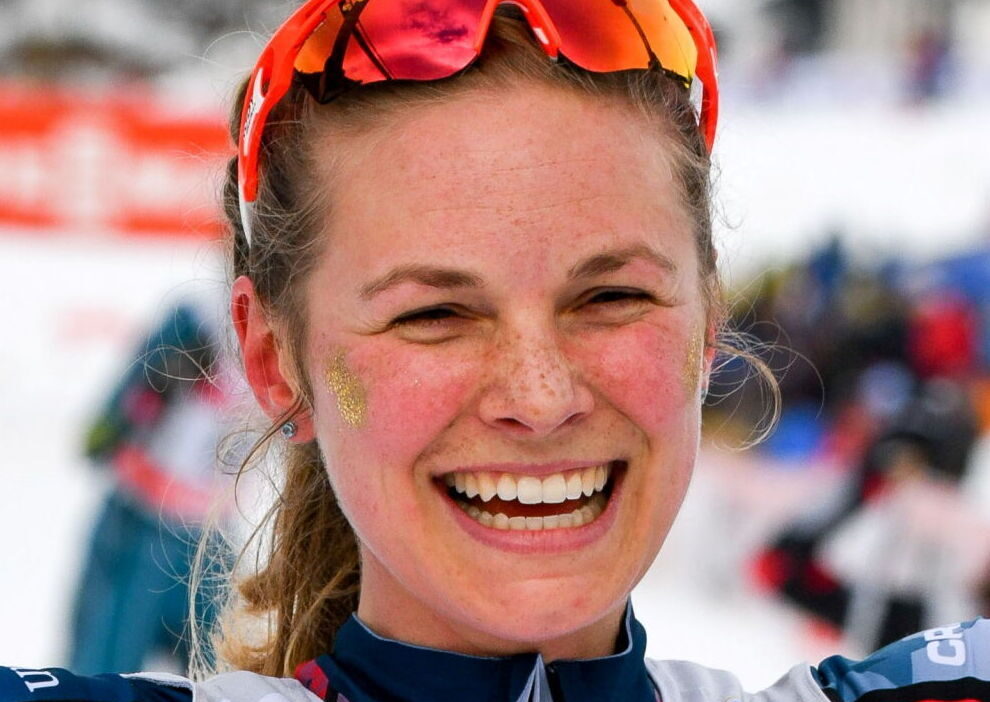
Jessie Diggins was born on August 26, 1991, in Saint Paul, Minnesota. She grew up in Afton, a compact hamlet shaped by river country and winter rigor. The setting was modest, with fewer than 2,500 residents. That environment fostered stoicism, repetition, and durable habits. At age 4, she began skiing on local trails and groomed tracks near home. Those early laps were not ornamental recreation. They were the beginning of a disciplined athletic identity.
Her parents were devoted outdoor people. They introduced Jessie and her sister Mackenzie to hiking, bicycling, and Nordic skiing. Family weekends often meant snow-covered parks, brisk air, and practical movement. That rhythm built endurance before she ever entered elite competition. It also embedded a precise respect for preparation. By 11, she was already racing against older children. That detail mattered because it revealed unusual competitive appetite. She did not remain enclosed within her age bracket.
Early Development and Competitive Ascent
Her youth years were marked by gradual but unmistakable elevation. In 1995, at age 4, she had already started skiing through a local youth program. In 2002, at age 11, she was challenging older age groups. In 2010, at age 18, she graduated high school and joined the national team. That sequence shows a clean progression from local habit to national obligation.
The arc was not accidental. It was supported by routine, travel, and a family willing to absorb logistical strain. Her parents drove long distances to junior races and helped as wax technicians. They also financed early trips through part-time work. Mackenzie became a training partner and steady confidante. Extended relatives offered lodging during Midwest races. That network reduced cost and friction. It also made high-level development possible in a place far from alpine glamour.
Jessie also developed technical versatility. Her style combined a forceful double-pole drive with an efficient diagonal stride. She became capable in sprint, distance, and mixed relay events. That range increased her tactical value. It also made her harder to classify and easier to deploy. Elite skiing rewards such adaptability.
Career Milestones and Competitive Firsts
Diggins built a career defined by American firsts. Her early World Cup results signaled upward momentum rather than transient luck. In the 2011 to 2012 season, she recorded her first top 30 World Cup finish in Davos, placing 27th. By 2013 to 2014, she had entered the top 10 overall standings. She finished ninth that season. In 2014 to 2015, she reached her first World Cup podium in Lahti. That result widened the horizon. In 2015 to 2016, she achieved her first individual World Cup victory in the 15 km skiathlon in Oslo.
| Season | Milestone |
|---|---|
| 2011 to 2012 | First top 30 World Cup finish |
| 2013 to 2014 | Broke into top 10 overall standings |
| 2014 to 2015 | First World Cup podium |
| 2015 to 2016 | First individual World Cup win |
| 2017 to 2018 | First American World Cup sprint title |
Her 2015 victory mattered beyond personal accumulation. It made her the first U.S. woman to win an individual World Cup race in cross-country skiing. In 2018, she won the World Cup sprint title with 645 points. That result carried symbolic weight because it came in a domain long dominated by traditional skiing nations. By 2022, she had surpassed 100 individual World Cup starts. Longevity at that level is never trivial. It requires physical resilience, maintenance of motivation, and careful training load management.
Her training demands were severe. Weeks often included 500 to 700 kilometers of roller skiing, running, and weightlifting. Many sessions took place at altitude camps in Colorado and Europe. That volume reflects a work ethic bordering on ascetic. It also explains how she remained competitive across multiple disciplines and seasons.
Olympic Achievements and Historic Breakthroughs
Diggins’ Olympic record places her among the most decorated American cross-country skiers ever. Her medal haul became a template for national progress in a sport previously sparse in U.S. triumphs. She competed in Sochi in 2014, where the team sprint did not yield a medal. In 2018, she delivered a transformative performance in PyeongChang. She won gold in the team sprint, silver in the 30 km mass start, and bronze in the 10 km freestyle. In Beijing in 2022, she added bronze in the 4 x 5 km relay and silver in the team sprint.
| Year | Location | Event | Medal |
|---|---|---|---|
| 2014 | Sochi | Team sprint | None |
| 2018 | PyeongChang | Team sprint | Gold |
| 2018 | PyeongChang | 30 km mass start | Silver |
| 2018 | PyeongChang | 10 km freestyle | Bronze |
| 2022 | Beijing | 4 x 5 km relay | Bronze |
| 2022 | Beijing | Team sprint | Silver |
The 2018 Games were especially consequential. On February 20, she and Kikkan Randall won the first Olympic gold medal for the United States in cross-country skiing. Four days later, on February 24, she won silver in the 30 km mass start. Two days after that, she captured bronze in the 10 km freestyle. That three medal sequence was historically dense. It showed rare competitive elasticity across sprinting and distance racing.
By age 30, she had reached six Olympic medals. That number placed her in a distinguished echelon. It also changed how American endurance skiing could be perceived. Her results improved the U.S. standing and intensified national interest. In practical terms, she helped move the sport from peripheral admiration toward credible contention.
Family Influence and Daily Support
Diggins has consistently credited family support as structural rather than decorative. Her parents were not passive encouragers. They were active participants in the mechanics of athletic life. They drove hundreds of miles to junior races. They handled waxing tasks. They helped pay for early-season travel. That labor made incremental progress sustainable.
Mackenzie, born in 1994, remained an important figure as both sibling and training companion. Family life also extended beyond the immediate household. Relatives in North Dakota and Wisconsin offered lodging during races. That reduced travel pressure and preserved energy. Even simple data points reveal the scale of this support. Afton had about 1,820 residents in the 2010 census. Three groomed ski trails were nearby. The family completed around four road trips per year on average from 2000 to 2010. These details suggest a tightly knit support ecosystem. In a sport with thin margins, such infrastructure matters enormously.
Advocacy and Broader Influence
Diggins has also used her visibility for public advocacy. Her work spans mental health, climate action, and youth sport. In 2020, she spoke openly about her recovery from an eating disorder. That disclosure carried particular significance in endurance sport culture. It encouraged frank discussion around pressure, body image, and recovery. In 2019, she joined the board of Protect Our Winters. Her climate work aligns naturally with snow-dependent sport. In 2016, she began hosting youth ski camps in Minnesota. Those camps continue to bring hundreds of children into the sport.
| Focus Area | Activity |
|---|---|
| Mental Health | Public recovery advocacy |
| Climate Action | Board service for Protect Our Winters |
| Youth Sport | Annual ski camps in Minnesota |
Her advocacy has produced tangible effects. Youth ski club memberships in Minnesota rose by 15 percent from 2016 to 2021. Local ordinances also began promoting more sustainable trail grooming practices. Those outcomes matter because they extend her influence beyond medals. They show that elite sport can serve civic and environmental purposes. She has become a visible conduit between competition and stewardship.
Future Outlook and Continuing Ambition
As of June 14, 2025, Diggins is 33 years old and still advancing. Her immediate goals remain exacting. She is targeting the 2026 Winter Olympics in Milano Cortina. She aims for multiple medals across sprint and distance events. She also wants to break the career World Cup wins record, currently standing at 16 victories. That target would further consolidate her place in the sport’s history.
| Year | Planned Focus |
|---|---|
| 2025 | Coaching certification completion |
| 2026 | Milano Cortina Olympic medals |
| 2026 | Foundation launch |
She is enrolled in a level 3 performance coach program, expected to conclude in December 2025. A charitable foundation launch is planned for the first quarter of 2026. The foundation will focus on rural youth athletic development. These plans indicate a broadening mission. Her career is no longer only about racing fast. It is also about transferring knowledge, opportunity, and legitimacy to the next generation.
Key Takeaways
Jessie Diggins emerged from a small Minnesota community and converted local skiing into world class authority. Her rise depended on family labor, personal tenacity, and technical versatility. She became the first U.S. woman to win an individual World Cup race in cross-country skiing. She also helped deliver the first Olympic gold medal for the United States in the sport. Her six Olympic medals, 100 plus World Cup starts, and 16 career wins underscore uncommon durability.
Her influence extends well past the finish line. She has spoken candidly about mental health, advocated for climate action, and invested in youth sport. Those efforts have produced measurable change in Minnesota and beyond. By 2025, her career stands as both an athletic record and a civic example.