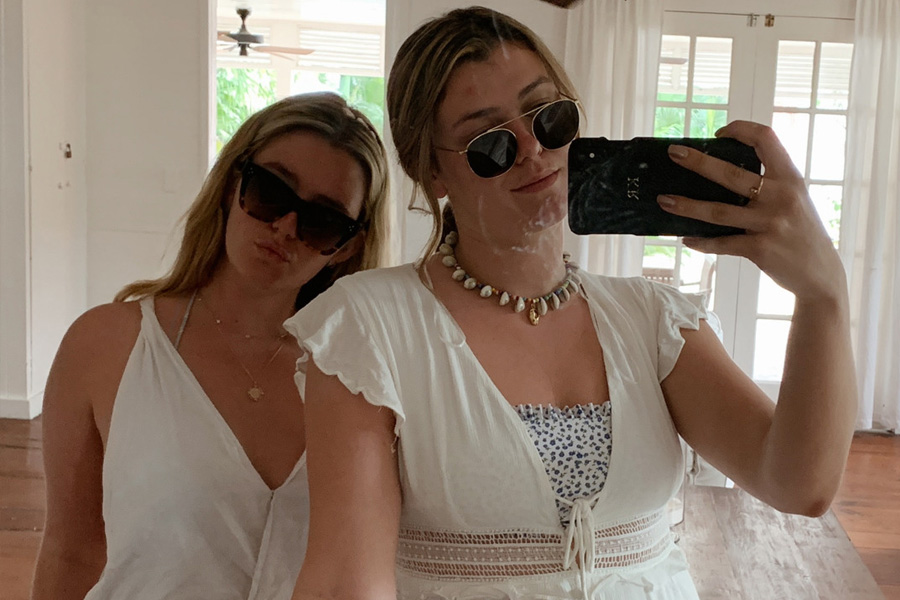
Meeting Kayla Rockefeller
Kayla Rockefeller occupies a curious place in contemporary American society. She belongs to a name that carries institutional memory, yet she presents herself through intimate adornment. That contrast gives her profile unusual texture. Her public image is not built around speeches or corporate declarations. It is shaped through objects small enough to hold in one palm.
Born in 1999, she entered a lineage already dense with prominence. The Rockefeller name carries civic, economic, and philanthropic residue. It evokes old wealth, public office, and long-lived influence. For many heirs, that inheritance becomes a burden or a script. Kayla appears to have answered it with a quieter grammar.
Her choice of jewelry as a vocation matters. Jewelry is personal, tactile, and symbolic. It lives close to the body and often outlasts the moment of purchase. A ring or chain can serve as memory, marker, or signal. In that sense, her work aligns with legacy, but in miniature form.
The Rockefeller Setting
The Rockefeller family is rarely understood through simple family-tree logic. It resembles a layered architecture of public service, capital, education, and private discretion. Each generation has tended to branch into distinct forms of responsibility. Some members moved toward politics. Others turned toward philanthropy or finance. That variety shapes the atmosphere around Kayla’s life.
Her father, Steven C. Rockefeller Jr., belongs to the more technical side of that inheritance. He is associated with private wealth, family office structures, and long horizon financial stewardship. Such work rarely invites headlines. Yet it sustains the practical mechanics of multigenerational continuity. It is maintenance as an art form.
Her mother, Kimberly Eckles Rockefeller, seems to have occupied a different role in the family rhythm. Social life requires orchestration, poise, and restraint. Charity evenings, private celebrations, and public gatherings depend on people who can manage visibility without excess. That kind of presence is often underestimated. It is social engineering with a softer surface.
Kayla also grew up with two older brothers. Steven Clark Rockefeller III, born in 1987, gravitated toward real estate and business activity. Christian Aldrich Rockefeller, born in 1991, has remained comparatively private. Together they form a sibling set shaped by privilege, expectation, and distinct routes into adulthood. Their paths help illustrate how inheritance disperses rather than repeats.
An Heirloom Temperament
What distinguishes Kayla most is her apparent preference for craft over spectacle. Jewelry design is not the loudest possible expression of legacy. It does not dominate a skyline or occupy a cabinet minister’s office. Instead, it works through detail, finish, and symbolic weight. That choice suggests discipline. It also suggests taste calibrated toward intimacy.
Her brand identity appears deeply personal. It feels less like a corporate machine and more like a signature. That matters in luxury culture, where consumers often seek narrative alongside material quality. A piece becomes more valuable when it seems connected to a hand, a memory, or a particular point of view. Her name itself contributes to that atmosphere.
The first public chapter of her brand seems to have arrived in 2023. That year marked a visible transition from private identity to public enterprise. Launch events, magazine attention, and appearances at social gatherings gave shape to that entry. The work was not introduced with bombast. It surfaced with controlled visibility, which suits the category well.
Public Life and Social Fluency
Kayla’s public profile has developed through an environment of curated appearances. Charity galas, fashion events, and elite social functions form a recognizable circuit. These occasions are not merely decorative. They are part networking arena, part ritual, part marketing platform. A jewelry line benefits from being worn in rooms where image carries currency.
She seems to move through that space with measured ease. Her manner, as presented publicly, is neither flamboyant nor withdrawn. That balance is difficult to sustain. Too much theatricality can cheapen luxury. Too little presence can erase it. Her position depends on remaining legible without becoming overexposed.
The overlap between personal life and brand life is central here. In many contemporary luxury sectors, the founder becomes part of the product. Presence itself becomes a form of promotion. A necklace seen at one event may circulate across photographs and conversations for days. The individual becomes a kind of display frame for the work.
Wealth and Independence
Family wealth often creates mistaken assumptions. The public tends to imagine boundless liquidity and effortless autonomy. In reality, legacy fortunes are usually complex. They involve trusts, vehicles, real estate, investments, and layered governance. Freedom exists, but it is rarely simple. It is administered.
Kayla’s personal finances are not publicly documented in a robust way. That absence leaves room for speculation, but little certainty. Her brand appears boutique in scale rather than industrial. That seems deliberate. Modern luxury often values scarcity more than mass reach. A limited run can carry more prestige than broad distribution.
Her advantage may be less direct capital than time. Time allows refinement. It allows mistakes to remain private. It permits experimentation without collapse. For a young designer from a wealthy lineage, that breathing room is a genuine strategic asset. It is not the same as guaranteed success, but it can support patient development.
Family History and Symbolic Weight
The Rockefeller name carries historical depth that extends well beyond one generation. It invokes industry, governance, and philanthropy in nearly equal measure. That breadth creates a formidable backdrop for any descendant. The family is not merely rich. It is narratively saturated. Public expectation arrives before personal introduction.
Among the most imposing figures in that history is Nelson Rockefeller. He served as Governor of New York and later as Vice President of the United States. His career linked the family directly to statecraft at the highest level. For someone like Kayla, that kind of ancestry can feel both dignifying and restrictive. It sets a formidable benchmark.
Her grandfather, Steven Clark Rockefeller, adds another layer. He is associated with scholarship, ethics, and philanthropy. That strand of the family history introduces intellectual seriousness into the lineage. It reminds observers that the Rockefeller name is not only about wealth accumulation. It also carries institutions, ideals, and public-minded commitments. Kayla’s more modest artistic lane sits within that broader inheritance.
A Timeline of Public Development
| Year | Milestone |
|---|---|
| 1999 | Birth into the Rockefeller family |
| 2010s | Formation years shaped by elite social and family settings |
| 2019 | Early participation in debut and society activities |
| 2023 | Jewelry brand launch and visible public introduction |
| 2024 to present | Continued appearances, design activity, and social presence |
The timeline appears compressed, but that is partly the nature of emerging public identities. A decade of private formation can precede a single visible launch. The result can seem sudden from the outside. Internally, it usually reflects years of preparation. Public recognition often arrives after the work has already become coherent.
Design as Identity
Jewelry can carry an unexpectedly large emotional burden. It is often worn on occasions that matter. Weddings, anniversaries, milestones, and memorials all give jewelry a ceremonial role. That makes the category unusually suited to a person interested in inheritance and memory. It can turn sentiment into material form.
Kayla’s aesthetic appears to lean toward heirloom sensibility. That means pieces likely favor longevity over trend noise. Such design values restraint, proportion, and symbolism. It privileges the item that can be kept rather than the item that can only be posted. In a saturated market, that distinction is important.
There is also a subtle cultural logic in her selection of accessories. Some heirs seek authority through institutional power. Others seek distinction through cultural production. Jewelry sits in a middle register. It is commercially viable, visually expressive, and personally scaled. That middle position may be exactly what makes it attractive.
Key Takeaways
Kayla Rockefeller represents a modern variant of legacy inheritance. She belongs to a storied family, yet she expresses herself through a carefully bounded creative path. That contrast gives her public profile unusual clarity. She is visible, but not overexposed. She is connected, but not reducible to the family name.
Her jewelry work reflects an understanding of how contemporary luxury functions. Small objects, limited availability, and personal narrative all matter. She seems to grasp that intimacy can be more persuasive than volume. That is a mature instinct for someone building a brand within a famous lineage.
Her story also shows how family history can remain present without becoming determinative. Rockefeller ancestry supplies visibility, opportunity, and context. It does not eliminate the need for judgment or craft. Kayla’s public life suggests she is trying to turn inherited prominence into a distinct creative language.