Early Life and Family Background
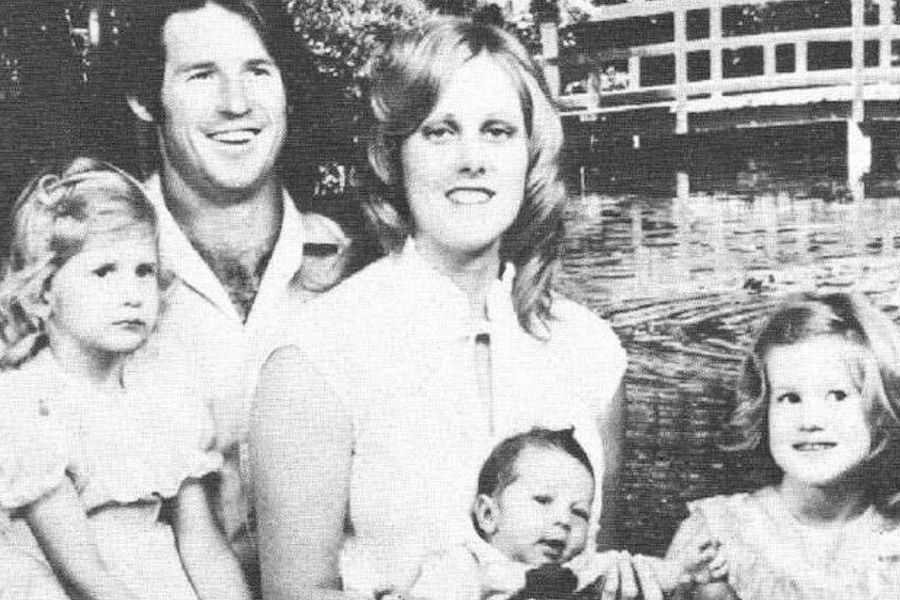
Stephen Danny Downs, often called Danny, entered public memory through one of the most unsettling family tragedies in modern American crime history. He was born in 1979, and his earliest years were shaped by instability, kinship rupture, and violence. His mother was Diane Downs, a figure whose name became inseparable from the 1983 shooting incident. His biological father was identified as Mark Sager, while his family structure also included his sister Christie Ann Downs and his sister Cheryl Lynn Downs.
The family narrative cannot be separated from the date that altered everything. On May 19, 1983, three children were shot in a single incident. Danny was still very young, about three or four years old, when that event occurred. Cheryl, who was seven, died from her injuries. Christie survived, but the trauma followed her into adulthood. Danny survived as well, though his life was permanently altered by paralysis from the waist down.
This history makes Danny’s biography unusually compressed in the public record. The facts are stark, and they resist embellishment. He is remembered first as a child survivor, not as a public adult personality. That absence is itself meaningful, because it reveals how some lives remain hidden after a violent spectacle has passed.
The 1983 Shooting and Its Consequences
The shooting on May 19, 1983, became the defining event in the Downs family story. It was not merely a crime case. It was a wrenching family catastrophe that drew national attention and long-term scrutiny. Danny’s injuries were severe, and the paralysis shaped everything that followed. The public record repeatedly emphasizes the same small set of facts: three children, one death, two survivors, and one case that would eventually produce a conviction.
The violence of that day had immediate and enduring consequences. Cheryl’s death gave the case its fatal center. Christie’s survival added a witness who later became central to the legal process. Danny’s paralysis made him one of the most visible survivors, even though his later life remained mostly private. For a child so young, the event did not simply injure the body. It reordered identity, family continuity, and public perception.
A concise timeline helps preserve the sequence of events.
| Date | Event |
|---|---|
| 1979 | Stephen Danny Downs was born |
| May 19, 1983 | The shooting incident occurred |
| 1984 | Diane Downs was convicted |
| 1986 | The surviving children were adopted by Fred and Joanne Hugi |
The chronology is important because it shows how quickly a family can move from private life into permanent historical record. Within a few years, the family had passed through trauma, criminal proceedings, and adoption. The aftermath became its own chapter, distinct from the violence but never fully separate from it.
Family Members and Legal History
Danny’s family history is dense with legal and domestic significance. Diane Downs is the central maternal figure in the public account, and her conviction in 1984 anchored the criminal dimension of the story. Steve Downs appears in the family timeline as Diane’s former husband, part of the domestic background that preceded the shooting. Mark Sager is identified as Danny’s biological father, a quieter presence in the documentary record.
Christie Ann Downs occupies a singular place because she survived and later testified. Her role gave the case a human testimony that extended beyond headlines. Cheryl Lynn Downs, by contrast, remains remembered through loss. She was only seven years old when she died on May 19, 1983. Her death remains the most irretrievable fact in the family account.
The grandparents, Willadene and Wesley Frederickson, also belong in the broader biography. They represent the older generational frame around the children’s lives. Yet public attention has rarely centered on them. The more visible adults are those tied to legal proceedings and adoption.
The adoption itself is the most morally intricate part of the later history. In 1986, Fred Hugi and Joanne Hugi adopted the two surviving children. Fred Hugi had served as the lead prosecutor in the case. That detail has drawn attention for decades because it seems almost dramaturgical in its irony. Still, it is also a legal fact, and a consequential one. The adoption offered stability, protection, and a new household identity after years of public turmoil.
Life After Trauma and Public Silence
After the shooting and the trial, Danny’s life became much harder to trace. That absence is not a void to be filled carelessly. It is a boundary. Public records emphasize his injury, his adoption, and the broader case history. They do not provide a reliable account of his adult profession, residence, or financial status. They do not present a polished public arc.
That silence should be read with care. Survivors of childhood violence often live beyond the frame that first defined them. They age, work, build private relationships, and construct ordinary routines. Yet the public often keeps them frozen in the moment of harm. Danny’s name is still linked to the 1983 shooting because that event was so severe, and because his childhood was pulled into a case that stayed culturally resonant.
His paralysis from the waist down is one of the few enduring personal facts disclosed about his later condition. Even that fact is not enough to tell a whole story. It indicates bodily consequence, but not daily life. It tells us what happened to him, not who he became. That distinction matters, especially when the public record is sparse and the temptation to speculate is strong.
A second table clarifies the divide between known facts and missing details.
| Publicly documented | Not publicly documented |
|---|---|
| 1983 shooting incident | Adult career details |
| 1984 conviction of Diane Downs | Current residence |
| 1986 adoption by Fred and Joanne Hugi | Net worth |
| Danny’s paralysis | Verifiable personal social media |
| Family names and kinship ties | Private daily life |
This gap defines the modern public understanding of Danny Downs. The record is exact on tragedy and thin on adulthood. That imbalance is common in cases where childhood trauma becomes a media object.
Cultural Memory and True Crime Fascination
The story of Stephen Danny Downs continues to circulate because it combines crime, family conflict, courtroom drama, and lasting injury. It appears in documentaries, podcasts, and retrospective accounts that return to the same terrible morning. The fascination is cultural, but the subject is human. The difference matters. One can analyze the case structure without forgetting that the people inside it lived through real harm.
True crime often converts suffering into narrative architecture. In this case, the architecture is unusually rigid. The shooting, the conviction, the adoption, and the surviving testimony form a sequence with dramatic force. Yet that force can obscure the children themselves. Danny is not merely a supporting figure in Diane Downs’s history. He is a person whose childhood was permanently fractured.
The language around the case sometimes leans theatrical because the events themselves seem almost implausible. But the facts remain concrete. One child died. Two survived. One mother was convicted in 1984. The survivors were adopted in 1986. Those are not decorative details. They are the structural pillars of the biography.
Key Takeaways
Stephen Danny Downs was born in 1979 and became known through the May 19, 1983 shooting that shaped his life. He survived the attack but was left paralyzed from the waist down. His sister Cheryl died, and his sister Christie survived and later testified.
Danny’s mother was Diane Downs, who was convicted in 1984. His biological father was Mark Sager. In 1986, Danny and Christie were adopted by Fred and Joanne Hugi. That adoption placed the surviving children with the prosecutor who had handled the case.
The public record is detailed about the crime and sparse about Danny’s adulthood. His private life, career, and residence are not reliably documented. That silence is not an omission to be sensationalized. It is the limit of what is publicly known about a person whose childhood became a lasting historical event.