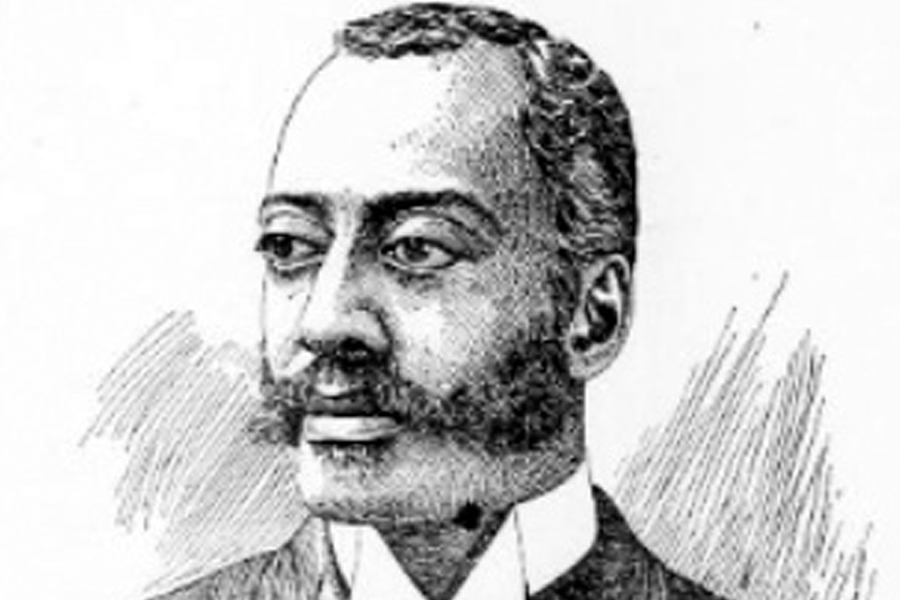
Early Life and Family Formation
Charles Remond Douglass was born on October 21, 1844, in Lynn, Massachusetts. He entered a household already charged with abolitionist purpose and intellectual discipline. His father, Frederick Douglass, was one of the most formidable public voices in the nation. His mother, Anna Murray Douglass, gave the family its practical fortitude and internal cohesion. Charles was the youngest son among five children, and his early years unfolded amid movement, argument, and aspiration.
The family relocated to Rochester, New York, in 1847. That change placed Charles inside a domestic world where learning was both duty and resistance. He attended public schools while segregation remained a brutal fact of American life. He also absorbed instruction at home through books, conversation, and the example of civic labor. By the time he reached adolescence, he had already been shaped by precision, restraint, and purpose.
Education and Formative Influences
Charles was named for Charles Lenox Remond, a friend of the family and an eloquent anti-slavery speaker. That naming was not incidental. It signaled an inheritance of moral seriousness and public engagement. He grew up surrounded by reformers, writers, and organizers who treated freedom as a daily practice. He also helped deliver issues of The North Star, learning the mechanics of print culture from the inside.
His education was uneven, as was common for Black children in that era. Private tutoring helped bridge gaps left by exclusion and discrimination. The household itself functioned as a workshop for political thought. Ideas about equality, labor, and citizenship circulated at the family table. Charles learned early that service could be quiet and still consequential.
War Service and Military Discipline
In April 1863, Charles enlisted during the Civil War. He is often credited as one of the first Black New Yorkers to do so after federal restrictions shifted. His initial association was with the 54th Massachusetts Infantry, a regiment whose reputation became historic. Illness kept him from deploying with that unit when it left for South Carolina. He later transferred to the 5th Massachusetts Cavalry.
Charles rose to first sergeant, a rank that demanded steadiness and authority. Black soldiers faced hostile conditions, unequal pay, and inferior supply. Their service required both courage and endurance. Charles experienced those demands directly. His military career was shortened by illness, and he received a discharge in 1864.
Even after leaving active service, he retained the habits of drill and discipline. He later helped organize the Capital City Guards in Washington, D.C. That all-Black militia unit eventually fed into the D.C. National Guard. Charles later held the rank of major. His wartime service thus became a longer civic apprenticeship.
Federal Work and Public Duty
After the war, Charles moved into federal employment. He worked in the Freedmen’s Bureau from 1867 to 1869. That office handled the difficult machinery of emancipation, including wages, schooling, and legal disputes. He then joined the Treasury Department from 1869 to 1875. Later, he served in the Pension Bureau from 1882 until 1920.
His career reflected persistence rather than spectacle. He worked inside institutions that shaped postwar citizenship. He also understood the bureaucracy of race in America. Records, claims, payrolls, and pensions were not abstract matters. They were instruments of survival for thousands of families.
In 1872, Charles joined the D.C. Board of School Trustees. There, he advocated for Black teachers and equal pay. The campaign was exacting and politically pointed. Education in the capital remained a contested field, and Charles pressed it toward fairness. His work linked public instruction with broader claims for dignity.
Diplomatic Service and Political Reach
From 1875 to 1879, Charles served as U.S. consul at Puerto Plata in the Dominican Republic. That appointment placed him inside Caribbean diplomacy during a volatile period. It also revealed the breadth of trust he had earned within federal circles. A Black diplomat in that era remained an uncommon presence. Charles carried the burden of representation in a distinctly visible role.
The consulship required tact, administration, and adaptability. It was not decorative service. It demanded judgment in a region significant to trade and policy. Charles’s tenure added another dimension to his public life. He moved between labor, diplomacy, and education with uncommon consistency.
Highland Beach and Black Community Building
In the early 1890s, Charles and his second wife, Laura Antoinette Haley Douglass, encountered discrimination at a Chesapeake resort. Their answer was practical and ambitious. Between 1892 and 1893, they purchased and platted land along the Anne Arundel County shoreline. That settlement became Highland Beach, Maryland. It was designed as a refuge for Black families seeking leisure, property, and autonomy.
Highland Beach emerged as one of the first Black-owned seaside communities in the United States. It embodied a distinct social vision. Ownership mattered there. Access mattered there. Dignity mattered there. Frederick Douglass himself established a summer home on one of its lots.
The place endured because it was more than a resort. It was a deliberate architecture of self-possession. Charles helped shape a community that resisted exclusion through land and planning. That achievement remains among the most durable markers of his life.
Marriage, Children, and Descendants
Charles married Mary Elizabeth Murphy in 1866. Their marriage produced six children, though only one survived to adulthood. That pattern of loss was tragically common in the nineteenth century. Their surviving son, Joseph Henry Douglass, became a distinguished violinist. He later performed at the White House and directed music at Howard University.
Mary died in 1879. Charles remarried in 1880, taking Laura Antoinette Haley as his second wife. Their son, Haley George Douglass, was born in 1881. He later taught at Dunbar High School and served as mayor of Highland Beach. The family line thus continued through education, music, and civic service.
The Douglass family represented a rare convergence of public leadership and cultural achievement. Charles stood within that lineage as a steady organizer. He was not the family orator. He was the executor, the builder, and the administrator. His descendants inherited that practical intelligence in different forms.
Character and Historical Texture
Charles Remond Douglass moved through history with measured force. He did not seek theatrical prominence. He worked instead in offices, on committees, and on shorelines. His life crossed battlefields, federal departments, and neighborhood planning. Each setting required a different discipline, and he adapted to all of them.
He lived during a period when Black citizenship remained fragile. Every position he held carried political significance. His clerical labor helped sustain Reconstruction-era institutions. His military service testified to Black participation in national defense. His community work at Highland Beach answered exclusion with architecture and ownership.
Charles also embodies a less heralded kind of leadership. It is easy to remember the speechmaker. It is harder to value the administrator. Yet the administrator often preserves what rhetoric only announces. Charles kept the practical order through which freedom became livable. That role deserves exact attention.
Timeline of Major Events
| Year | Event |
|---|---|
| 1844 | Born in Lynn, Massachusetts |
| 1847 | Moved with family to Rochester, New York |
| 1863 | Enlisted during the Civil War |
| 1864 | Discharged due to illness |
| 1866 | Married Mary Elizabeth Murphy |
| 1867 to 1869 | Worked in the Freedmen’s Bureau |
| 1869 to 1875 | Worked in the Treasury Department |
| 1872 | Served on the D.C. Board of School Trustees |
| 1875 to 1879 | Served as U.S. consul at Puerto Plata |
| 1880 | Married Laura Antoinette Haley |
| 1892 to 1893 | Helped create Highland Beach |
| 1920 | Died in Washington, D.C. |
Financial Circumstances and Material Standing
Reliable net worth figures for Charles Remond Douglass do not survive. That absence is unsurprising for a nineteenth century federal clerk. Salaries in such roles were generally modest. His career nevertheless suggests gradual accumulation rather than affluence. Long service in government, paired with property at Highland Beach, points to disciplined middle class stability.
The financial record is important because it clarifies the scale of his achievement. Charles did not build wealth through speculation or inheritance. He built security through tenure, judgment, and continuity. That kind of prosperity mattered greatly in a hostile era. It enabled family care, land ownership, and civic permanence.
Key Takeaways
Charles Remond Douglass was born in 1844 and died in 1920, spanning slavery, war, Reconstruction, and Jim Crow. He served in the Civil War, held multiple federal posts, and worked as a diplomat. He also fought for Black teachers and equal pay in Washington, D.C. His most enduring civic achievement was Highland Beach, a Black owned seaside community founded in the early 1890s. His life showed how administration, land ownership, and public service could become instruments of freedom.