Early Life and Artistic Formation
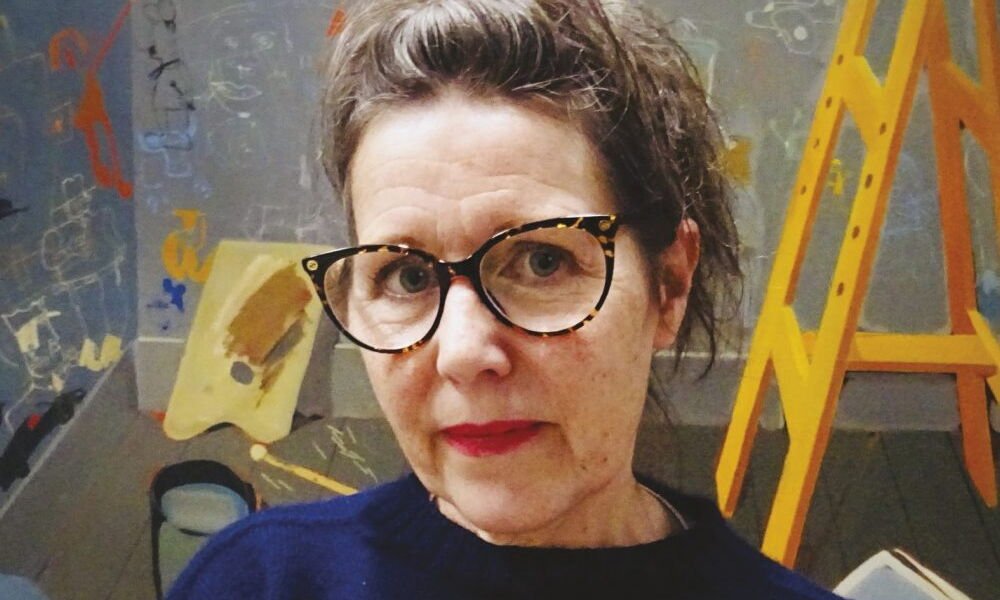
Celie Byrne emerged from a formidable creative lineage, yet her own practice developed with clear independence. She was raised in Renfrewshire, Scotland, within an environment shaped by visual art and literary imagination. That background gave her proximity to artistic discipline, but not an automatic artistic identity. She pursued that identity through study, experimentation, and persistent professional labor.
Her academic foundation came from Duncan of Jordanstone College of Art and Design, where she completed an MFA before age 30. That detail matters because it places her within a rigorous training context during a decisive formative period. An MFA does not merely polish skill. It also sharpens judgment, method, and visual vocabulary. Byrne appears to have used that stage to develop a durable practice rather than a temporary style.
The early arc of her career also included community arts work by her mid 20s. That suggests an artist attentive to social context, not only studio refinement. Community arts often require adaptability, collaboration, and practical communication. Those qualities later align well with her broader range of work across portrait painting, murals, installations, and journalism.
Portraiture as Core Practice
Portrait painting sits at the center of Byrne’s professional identity. Portraiture demands more than anatomical accuracy. It requires acuity toward temperament, posture, and psychological nuance. A strong portrait can carry likeness without becoming inert description. Byrne’s specialty indicates an interest in those more elusive dimensions.
Her portrait work gained wider visibility through the BP Portrait Award at the National Portrait Gallery in London. That exhibition remains one of the better known platforms for contemporary portrait practice. Inclusion there signals technical competence and curatorial relevance. It also suggests that her work operates within a competitive and exacting field.
Portraiture is often undervalued as a conservative genre, but that reading is incomplete. In skilled hands, it becomes a site of interpretation, intimacy, and visual rhetoric. Byrne’s focus on portrait painting implies an artist willing to work with recognizable form while still pursuing expressive depth. That balance can be difficult to maintain. It requires restraint, discernment, and a refusal to overstate.
Murals Installations and Public Work
Byrne’s practice is not confined to easel painting. She has also worked on murals and installations, which expand her language into public and collaborative settings. These forms demand larger compositional thinking and an awareness of architectural context. A mural is never just a painting enlarged. It is a negotiation with place, surface, and audience movement.
Her Alhambra Theatre mural in Dunfermline demonstrates that capacity well. A theatre anniversary project carries both commemorative and civic significance. Public art of that kind must satisfy historical memory while remaining visually legible. It also needs to hold up under repeated viewing, from varied distances and angles. That kind of work rewards compositional confidence.
She also contributed to Occupied Thoughts, Occupied Space at Dunoon Burgh Hall in 2021. Collaborative installation work usually requires less self-containment than studio painting. It depends on shared concept, mutual adjustment, and environmental responsiveness. Byrne’s participation in such a project shows range. It also shows she is not locked into a single mode of making.
Residency and Development
Artist residencies often function as pressure chambers for new ideas. Byrne completed a residency at Studio Faire in France in 2020. That year was unusually constrained for many artists, which makes the residency context more notable. A residency can offer time, concentration, and a change of surroundings. It can also produce a shift in scale or method.
For an artist with interests in portraiture and public work, residency time can be especially useful. It allows a practitioner to step back from commissions and obligations. It can also produce fresher formal decisions. That kind of interval is often where a body of work becomes less derivative and more recognizably personal. Byrne’s residency therefore fits a pattern of deliberate artistic consolidation.
Writing and Art Journalism
Byrne also works in art journalism, which broadens her profile beyond image making. Writing about art requires a different kind of intelligence. It asks for precision, synthesis, and interpretive calm. An artist who writes about exhibitions and art therapy is likely thinking carefully about framing and reception. That can feed back into studio work.
Her contributions to publications such as Art Mag UK and East Fife Mail indicate sustained engagement with the wider art ecosystem. Journalism in this context is not merely promotional. It can serve as a reflective bridge between artists, institutions, and the public. Byrne’s dual role as maker and writer gives her perspective on both production and discourse. That combination is relatively uncommon and useful.
Family Context and Public Recognition
Byrne’s family background inevitably draws attention. Her father was John Byrne, a major Scottish playwright and artist whose influence extended across theatre and visual culture. Her mother is Alice Simpson. She also has half siblings, Honor Byrne and Xavier Byrnes, through her father’s relationship with Tilda Swinton. That family constellation is publicly visible, but Byrne’s own career should not be reduced to inheritance.
Still, family context can shape both opportunity and perception. It can open access to cultural conversation while also producing comparison. The more relevant issue is whether an artist develops an independent voice. Byrne appears to have done so through the steady accumulation of projects, exhibitions, and public work. Her practice reads as grounded rather than ornamental.
It is also notable that her public profile spans both established institutions and more intimate channels. She maintains an online presence through Pinterest and YouTube. Those platforms can function as informal archives, process windows, or visual notebooks. For contemporary artists, such channels often complement formal exhibition spaces. They can help sustain visibility between major projects.
Selected Career Milestones
| Project or Exhibition | Type | Location | Year |
|---|---|---|---|
| BP Portrait Award | Exhibition | National Portrait Gallery, London | Ongoing |
| Studio Faire Residency | Residency | France | 2020 |
| Occupied Thoughts, Occupied Space | Installation | Dunoon Burgh Hall | 2021 |
| Alhambra Theatre Mural | Mural | Dunfermline | 2022 |
| Art Journalism | Writing | Scotland and online | Ongoing |
This sequence shows a practice moving across formats without losing coherence. The timeline also reveals continuity. Byrne has not pursued a single publicity peak and then disappeared. Instead, she has maintained a layered career with recurring activity across portraiture, public art, and writing. That pattern is usually more indicative of durable artistic seriousness than isolated notoriety.
The range is important because it shows how her work inhabits different registers. A portrait can be intimate. A mural can be civic. An installation can be conceptual. Journalism can be analytical. Byrne’s practice touches all four.
Public Presence and Contemporary Relevance
Contemporary artists often need to navigate both physical exhibitions and digital circulation. Byrne seems aware of that reality. Her online visibility extends her work beyond the immediate site of display. In practical terms, that means her art can travel farther and persist longer in public memory. It also helps viewers encounter her work through multiple entry points.
Her recent activity suggests ongoing commitment to community art projects. That matters in a cultural climate where many artists are pressured toward spectacle or market signaling. Byrne’s practice appears more considered. It values process, local presence, and varied modes of engagement. Those traits can sometimes appear understated, but they are structurally important.
Her work also sits within a Scottish artistic continuum that values narrative, regional identity, and strong craft traditions. Yet she does not seem confined by that inheritance. The mixture of portraiture, murals, installation, and writing indicates mobility. Her career has the shape of a working artist, not a static brand. That distinction remains significant.
Key Takeaways
Celie Byrne is a Scottish visual artist whose practice centers on portrait painting. She also works in murals, installations, and art journalism. Her MFA from Duncan of Jordanstone College of Art and Design helped establish a strong technical base. The BP Portrait Award at the National Portrait Gallery gave her work wider recognition.
Her career includes the Studio Faire residency in 2020, the Dunoon Burgh Hall installation in 2021, and the Alhambra Theatre mural in 2022. Those projects show range across intimate and public forms. Her family background includes John Byrne and Alice Simpson, but her own record stands on its own terms. Byrne’s path reflects disciplined development, formal versatility, and a sustained commitment to visual expression.